

When the rainy season arrives, many solar users wonder whether their systems will continue to generate electricity. Since solar panels depend on sunlight, it’s natural to assume that heavy clouds and rain would stop energy production entirely. But the truth is more reassuring. Even during rainy weather, solar panels can still work and supply power, although at a reduced capacity. With improvements in solar technology and efficient panel materials, performance during rain is better than most people expect.
In this blog, we’ll explain how solar panels function during rain, why they continue producing energy, and what homeowners can do to maximize performance.
How Solar Panels Produce Energy Even During Rain
To understand why solar panels continue to work in rainy weather, it helps to know how they function. Solar panels convert light, not heat, into electricity. Even when skies are cloudy, there is still diffused sunlight present. This diffused light scatters through clouds and reaches the solar panel surface, allowing it to continue generating power.
So the question, do solar panels work during rain, has a clear answer: yes, they do, just at a lower efficiency.
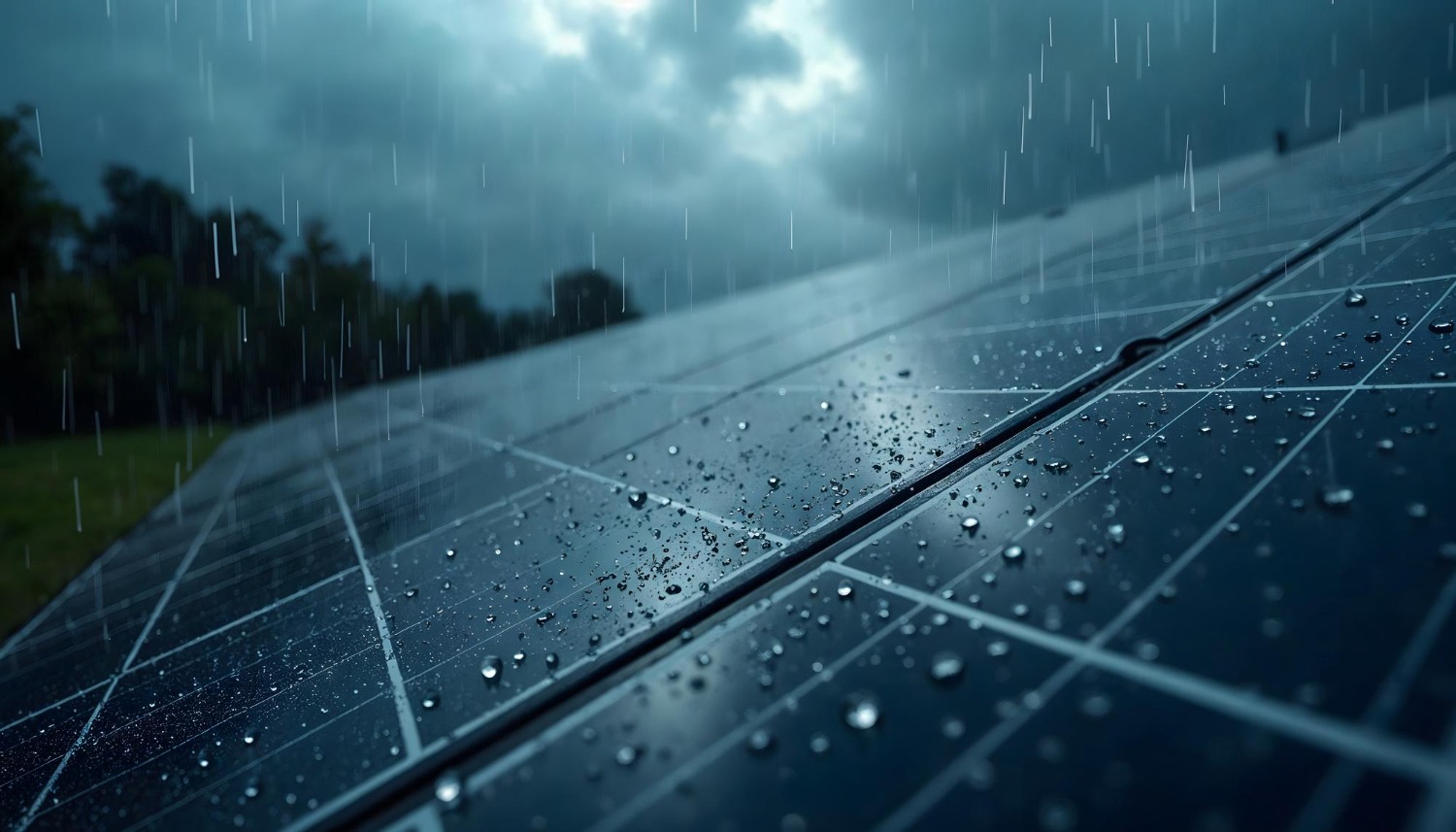
On average, solar panels can produce 10 to 25 percent of their normal output on rainy or heavily cloudy days. While this is significantly lower than sunny-day performance, it still contributes to powering your home.
Benefits of Rain for Solar Panels
While rain might reduce sunlight temporarily, it offers several long-term benefits for solar panel efficiency.
1. Natural Cleaning Effect
Dust, dirt, pollen, and bird droppings accumulate on solar panels over time. This buildup blocks sunlight, reducing efficiency. Rainwater washes away most of this debris and helps restore performance. This natural cleaning can sometimes increase efficiency once the weather clears.
2. Cooling Effect on Panels
Solar panels operate more efficiently at lower temperatures. Excessive heat can reduce voltage production. Rain cools the panels naturally, helping them perform better when sunlight returns.
3. Protection from Overheating
Consistent rain during the monsoon season can protect the panel surface and internal components from overheating, thus extending the system’s lifespan.
How Much Power Do Solar Panels Generate During Rain?
Solar power generation in rain depends on several factors:
1. Cloud Density
Thick, dark clouds reduce sunlight drastically. Light clouds still allow plenty of diffused light to pass through.
2. Solar Panel Type
Monocrystalline panels usually perform better in low-light conditions compared to polycrystalline panels.
3. Cleanliness of Panels
Cleaner panels absorb more light. Fortunately, rain helps with natural cleaning, improving solar panel performance in rain once the sky brightens.
4. Angle and Placement of Panels
Panels positioned at the correct angle can receive maximum light even during cloudy conditions.
On average, panels generate 10 to 25 percent of their usual output, but advanced technologies can improve this range further.
Do Solar Panels Work on Cloudy Days Without Rain?
Yes, even when it’s simply cloudy without rainfall, solar panels still generate energy. The output depends on cloud thickness. For example:
• Light clouds allow more sunlight
• Thick monsoon clouds reduce efficiency
• Partly cloudy days can see spikes in performance when the sun peeks through gaps
So, rainy season solar performance varies daily, but solar energy in cloudy weather still contributes significantly to your system’s annual output.
Can Rain Damage Solar Panels?
Solar panels are designed to withstand harsh weather conditions including rain, wind, hail, and thunderstorms. They are built with durable tempered glass and water-resistant materials. So while it’s normal to worry about moisture, rain generally does not harm the system.
However, there are a few things to keep in mind:
• Regular inspection helps prevent long-term water damage
• Ensure wiring and junction boxes are properly sealed
• Avoid climbing on wet rooftops for cleaning
A properly installed solar system handles rain safely and efficiently.
Myths About Solar Panels and Rainy Weather
Myth 1: Solar panels stop working in rain
Fact: They continue generating electricity, just at a reduced level.
Myth 2: Rain is bad for solar panels
Fact: Rain helps clean and cool the panels.
Myth 3: Solar panels only work in strong sunlight
Fact: Panels work with diffused light, reflected light, and even low-intensity solar radiation.
How to Maximize Solar Performance During Rain
Even though solar panels work during rain, you can enhance their efficiency with a few simple steps:
1. Keep Panels Clean
Although rain helps, occasional cleaning ensures no residue or mud remains.
2. Trim Nearby Trees
Shadows become more impactful during cloudy days, so ensure trees don’t block sunlight.
3. Monitor Energy Output
Keep an eye on inverter readings to spot sudden drops in production.
4. Maintain Your Battery Backup
During the monsoon, battery backups are helpful since solar output may vary.
5. Schedule a Professional Inspection
A quick seasonal check ensures all wiring and components remain safe during rainy months.
With these steps, you can improve rainy season solar performance and enjoy consistent power generation.
Final Thoughts
So, do solar panels work during rain? Yes, absolutely. While they may not produce as much electricity as on sunny days, they still generate useful power and benefit from natural cleaning and cooling. Solar technology is designed to work year-round, even in areas with frequent rain or cloudy weather.
If you maintain your system well and understand how weather affects performance, your solar panels will continue delivering reliable and efficient energy no matter the season.
FAQs
1. Do solar panels generate electricity during rain?
Yes, solar panels still generate electricity during rain using diffused sunlight. Output may drop but does not stop completely.
2. How much power do panels produce on rainy days?
They typically generate 10 to 25 percent of their normal output depending on cloud density and panel quality.
3. Can rain damage solar panels?
No, panels are built to be weather-resistant and waterproof. Rain generally helps clean and cool them.
4. Do solar panels work on cloudy days?
Yes, they do. Cloudy weather reduces performance but does not stop energy production.
5. Does rain help clean solar panels?
Yes, rain naturally washes away dust and debris, improving efficiency afterward.